
A supportive physical environment in Early Learning.
Each room, garden, corner, and texture offers something new to explore. At Uniting Early Learning, we design our physical environments with this in mind.
Early Learning
Environment.
Our centres across Victoria and Tasmania are safe, stimulating, accessible and thoughtfully crafted to support every child’s wellbeing, curiosity, and growing sense of identity. Whether indoors or outdoors, each space is created with purpose: to inspire discovery, nurture confidence, and help children feel at home the moment they arrive.
What defines an early childhood learning environment
An early childhood learning environment is more than the walls and playgrounds that surround children each day. It is the atmosphere created by thoughtful design, meaningful interactions, and rhythms that help children learn through play. An effective environment encourages independence and exploration, offering children many ways to engage: through sensory play, creative expression, movement, language, and social experiences.
It matters because children learn with their whole selves. They learn through what they see, touch, hear, and feel. High-quality learning environments in early childhood create opportunities for guided discovery, challenges, and the steady reassurance that they are safe and supported. When the physical space is attuned to children’s needs, learning becomes natural and joyful.
Indoor learning environments in early childhood
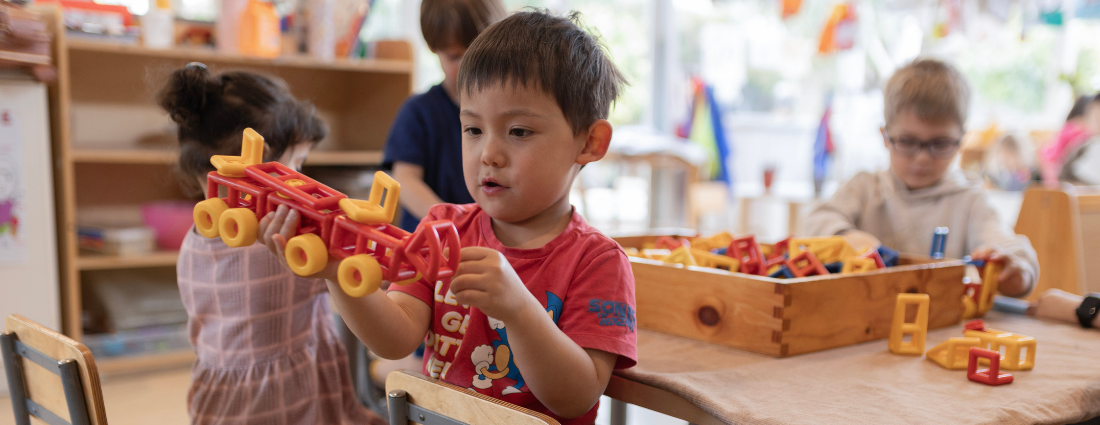
Inside every Uniting Early Learning centre, the indoor environment is calm, inviting, and intentionally arranged. Cosy corners, and natural materials create a sense of warmth and comfort. Spaces are set up so children can move freely, selecting puzzles, picture books, blocks, art materials, or dramatic play items that spark their imagination.
Shelves are placed at toddler height, activities are thoughtfully rotated, and quiet nooks offer a place to rest or reset. These spaces encourage creativity and exploration while supporting children’s autonomy. Indoor learning environments in early childhood allow children to immerse themselves in painting, loose-parts play, music, sensory trays, or collaborative building.
Outdoor and natural learning environments
Stepping outside is a world of possibility; one that children naturally gravitate toward. Uniting’s outdoor spaces are designed for adventure, movement, and connection with nature. From sandpits and water play tables to grassy areas, climbing structures, veggie gardens, and shaded quiet spaces, children can choose how they interact with the outdoors.
Outdoor learning supports physical development, risk assessment, and social connection. Children practise balance, coordination, and spatial awareness while also learning respect for plants, insects, weather, and the natural rhythms of the day. The environment becomes another teacher, prompting curiosity and teamwork in every shared discovery.
Typical day at a Uniting Early Learning Centre
While each centre follows its own routine, there’s a standard daily rhythm to help children feel grounded in a predictable and comforting routine:
Children are greeted warmly by educators and friends, easing into the day with play-based activities.
Art, sensory play, building, and small-group learning encourage imagination and self-expression.
Outdoor exploration invites children to climb, run, dig, create, and collaborate, at bush kinder where they also learn connection to Country - learning about the land.
Children enjoy a nourishing meal, practising independence with self-help skills.
A peaceful atmosphere allows children to nap, read, or engage in low-energy activities.
Educators share stories, songs, and conversations that spark language and connection.
Children choose activities that interest them, deepening their learning through play.
Families arrive, and educators share highlights from the day.
Partnering with families to create a home-like environment
Children thrive when the worlds of home and childcare feel connected. Uniting collaborates closely with families to create environments that feel familiar, comforting, and meaningful.
Sharing learning philosophy with families
Families are invited into the learning environment philosophy from the very beginning. Educators communicate regularly to share insights about play-based learning, the layout of spaces, and the intentionality behind materials and routines. Through newsletters, conversations, digital updates, and family meetings, parents stay informed about how their child is learning and how the environment supports that growth.
Strengthening the home-centre connection
Consistency builds confidence. When families and educators work together, children feel secure moving between settings. By discussing routines, interests, cultural practices, and developmental needs, educators can reflect each child’s home life in the centre’s routines.
The physical environment in childcare
A great early learning environment begins with safety, wellbeing, and sustainability. At Uniting, every early learning space meets rigorous standards to ensure children can explore confidently and safely.
Safety is the foundation of every centre. Well-maintained facilities, secure outdoor areas, soft-fall surfaces, accessible pathways, and regular checks ensure all children are protected. Cleanliness and hygiene are prioritised throughout the day, and classrooms are arranged to prevent overcrowding while supporting easy supervision
Uniting is committed to environmental responsibility. Centres use eco-conscious materials, emphasise natural fibres, and incorporate recycled resources into play. Recycling initiatives, water-saving practices, and energy-efficient design help reduce environmental impact and teach children the value of caring for the earth. We also have veggie gardens at centres used for snacks and meals.
Nature is woven into the daily rhythm, from gardening and composting to outdoor art, collecting natural materials, and seasonal and first nation storytelling. These experiences help children understand cycles, growth, and their role in protecting the environment.
A thoughtfully designed environment doesn’t just hold learning; it sparks it. At Uniting, every room, garden, and shared space supports children as active participants in their own learning journey.
Open-ended materials, child-height furniture, and flexible activity stations encourage children to follow their interests. They learn to problem-solve, make choices, and take ownership of their play.
Shared spaces naturally encourage communication and teamwork. Whether building a block tower, watering the garden, or creating a group mural, children practise empathy, negotiation, and meaningful connection.
A calm, inviting physical environment in childcare and kindergarten helps children regulate emotions, feel safe, and develop confidence. Soft textures, cosy spaces, and quiet corners give children the freedom to pause, rest, or reflect.
Looking for some childcare guidance?
If you are unsure how to find the right Uniting service for your child, please contact us on 1800 183 103 or fill out an online form.