Child development is fluid and occurs over a span of time, not on a particular schedule or in a particular sequence. Different children develop their skills in different areas in different orders. Children’s skills and developmental progressions can occur at any time; and the order of developmental milestones your child progresses through is likely to differ to their peers, or another child you might have in the family.
Child development milestones shouldn’t be viewed as a checklist. Rather, milestones can help you to understand your child, their learning and to get a sense of children’s typical behaviour.
Much of what we see from children is entirely developmentally appropriate. For example, a child between 8-12months is developmentally likely to shout for attention. A child between 2-3 years old will find it hard to share toys with others. Both examples describe completely normal development and behaviour for the age range.
Having an awareness of developmental milestones can help families hold appropriate expectations on children’s behaviour. For example, knowing it is developmentally appropriate for a child who is 3-5 years old to become angry or frustrated with peers in play might make is easier to support your child if these emotions do arise.
For educators, sometimes it is useful to think about children’s learning in relation to the EYLFDM to better understand your child’s strengths and areas of advancement, as well as the areas where their next best learning goal might be.
Key Areas of Early Childhood Development
Physical Development
The way children move their body helps them experience the world and connect with their environments. When children can increasingly move in ways that allow them to play, like manipulating toys, take care of their needs like feeding themselves with a spoon, and connect with others through things like dancing to music, they experience developmentally rich learning moments.
Social Development
Being able to interact with others in the world is an incredibly important skill that starts with newborn babies interacting with their primary caregiver/s. As children progress, their awareness of others in the world, and their interest in being with and interacting with others, increases. Practising being social takes time, and in early childhood involves some important protective factors, like being wary of strangers, along with effort of connection like playing alongside, and then with other children.
Emotional Development
Seeking attention from trusted adults, seeking comfort when upset and showing empathy to others who are in distress are examples of children’s emotional competency in action. Being emotionally connected to others and showing developmentally appropriate emotional responses are signs your child is learning and progressing well.
Cognitive Development
A huge amount of brain development occurs between birth and 3 years old.
Developmentally appropriate cognition is evident when children point to objects when they are named, recognise themselves in a mirror or photo and repeat actions that lead to an interesting outcome – like banging a spoon on a table!
Language Development
As children develop, they will begin to use words and approximations of words to communicate with their caregivers. As language progresses, children will begin to join two words together to begin speaking in phrases, and so on. These progressions are not solely age-based and happen at different times for children.
Developmental Milestones by Age
Birth-1 Years
A child develops rapidly in their first year of life. From being able to squirm, smile and laugh as a newborn, to responding to their name being called between 4-8months, there is so much to notice in very young babies. Noticing milestones help us know children are growing and thriving, and the EYLF developmental milestones describe learning in every 4-month progression:
- 0-4months
- 4-8months
- 8-12months.
For families and educators, seeing these progressions, like rolling from back to stomach, being happy to see faces they know, or shaking a toy in their hand can bring lots of joy and reassurance. At this age, playing with your baby using lots of language and eye contact will set your baby up for success.
1 to 2 Years
Between the ages of 1-2 years, you might notice the following in your child:
Physical, Social and Emotional
- crawls up steps
- dances in place to music
- climbs onto chair
- kicks and throws a ball
- feeds themselves
- begins to run (hurried walk)
- scribbles with pencil or crayon held in fist
- may show anxiety when separating from significant people in their lives
- seeks comfort when upset or afraid
- takes cue from parent or principal carer regarding attitude to a stranger
- may ‘lose control’ of self when tired or frustrated
Language and Cognition
- comprehends and follows simple questions/instructions
- begins to use one-to-two-word sentences, e.g.” want milk”
- points to objects when named
- knows some body parts
- points to body parts in a game
- recognises self in photo or mirror
- mimics household activities, e.g. bathing baby, sweeping floor
2 to 3 Years
Between the ages of 2-3 years old, your child might demonstrate the following:
Physical, Social and Emotional
- walks, runs, climbs, kicks and jumps easily
- uses steps one at a time
- squats to play and rises without using hands
- catches ball rolled to him/her
- walks into a ball to kick it plays with other children
- simple make believe play
- may prefer same sex playmates and toys
- unlikely to share toys without protest
- shows strong attachment to a parent (or main family carer)
- shows distress and protest when they leave and wants that person to do things for them
Language and Cognition
- uses two or three words together
- copies words and actions
- make music, sing and dance
- likes listening to stories and books
- engages in making believe and pretend play
- begins to count with numbers
- recognises similarities and differences
- imitates rhythms and animal movements
3 to 5 Years
Between the ages of 3-5 years old, we begin to see some key developments in children’s overall learning. Your child might begin to:
Physical, Social and Emotional
- hop, jump, run and climb steps using alternate feet
- demonstrate independence in toileting
- feed themself with minimum spills
- share, smile and cooperate with peers
- enjoy playing with other children
- understand when someone is hurt and offers support
- give and receive affection with caregivers
- enjoy praise and is boastful
Language and Cognition
- speak in sentences using many different words
- ask and answers simple questions
- talks a lot!
- enjoys rhymes, jokes and stories
- follow simple instructions
- retell stories and recall events
- count five to ten things
- has an increasing attention span
How Learning Environments Support Developmental Milestones
Young children learn through play, connection to the environment and meaningful engagement with others. Our Uniting Early Learning environments are designed to enable the play-based learning children need to practice and progress through the developmental milestones.
In our early learning environments, children experience age and developmentally appropriate resources and are cared for and communicated with in ways that meet their developmental needs. Having regular routines and a rhythm to the day, along with seeing familiar educators also makes a positive contribution to their learning.
Perhaps most importantly, in our early learning environments, children are provided with the chance to explore developmentally appropriate challenges and are provided with the chance to practice the skills that will help them embark on their next leap of development.
Early developmental milestones are one way to view children’s learning and development. Milestones shouldn’t be used as a checklist, and there is not a strict expectation when it comes to development; children meet their milestones at different ages and in different ways. If you have concerns about your child’s progress, speak to your child’s educator, maternal child health nurse or GP for support.
Practical Ways Parents and Educators Can Support Early Learning
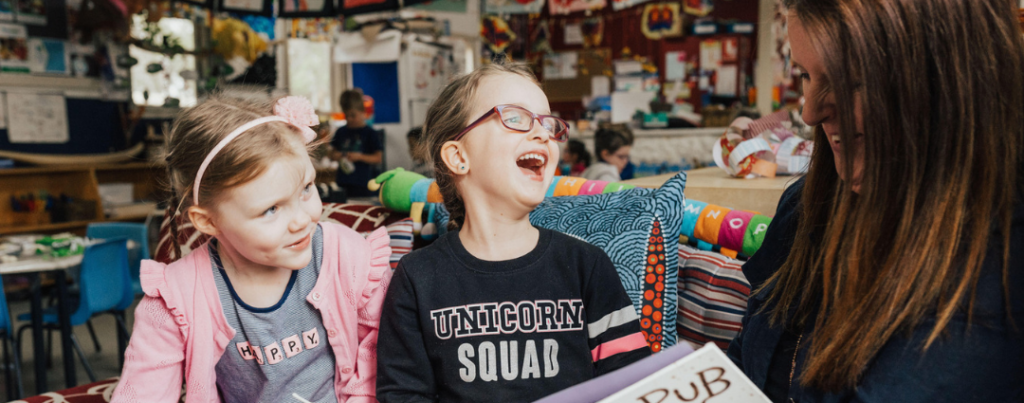
Reading and Storytelling – In early childhood, hearing a vast array of spoken words is one of the best ways to learn new words. Story books are a particularly helpful tool to expose children to unique sets of words relating to each text; words that go well beyond what they might experience at home. Think of some of the storybooks you might have on your bookshelf: books about gardens, pirates, unicorns, planets and dinosaurs all do wonders for expanding children’s exposure to new words.
To support your child in this area, read aloud to your child daily.
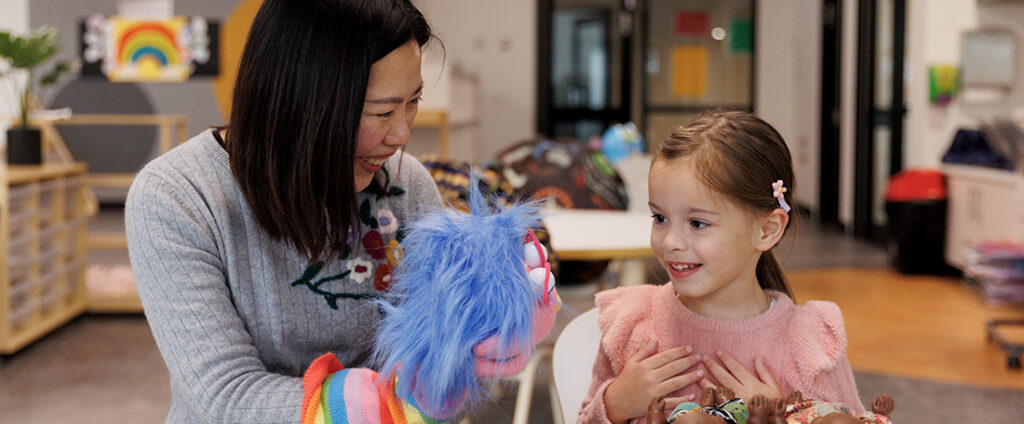
Everyday Interactions – Speaking with your child about their day and what you are doing is a great way to enhance their learning milestones. Narrating your actions as they occur shows children how you problem-solve in real time and adds new vocabulary to their language repertoire. Hearing and contributing to lots of conversations with a trusted adult is one of the best things for children to become effective communicators.
Serve and Return – Serve and return is a responsive, back-and-forth interaction between a child and a caregiver. Like a tennis rally, the child “serves” by making a gesture or sound, and the adult “returns” it with a supportive response. These exchanges build critical brain architecture and early communication skills. Children won’t always use complete words when serving, so listen out for approximations of words and gestures too, as any efforts to communicate can be used in a serve and return communication
Challenges to Avoid When Supporting Developmental Milestones
Comparison
It can be easy to compare your child’s progress to someone else’s, especially when they present with a new skill or leap in development. Do your best not to compare children, as this can place unneeded pressure on yourself and your child.
Use Milestones as a Checklist or Test
It is not necessary to ‘test’ your child against developmental milestones, as children’s growth and learning needs to be viewed holistically and is highly dependant on varying factors like environment, the child’s character, health and age, life experiences, interests and more.
Where to go for support
If you have a particular concern about your child’s behaviour, learning or progress, always chat to your early learning educator for support. They will observe your child and provide you with their professional understanding of your concern or help provide more information to support you and your family.
Choosing the Right Early Learning Environment
To ensure you’re choosing an early learning environment that values the developmental milestones, ensure you see the following when you tour:
- You see a planned program in the room
- There is a play-based program in place
- There are plenty of spaces for children to engage in different types of play
- You see educators communicating with children in play
- You see children playing in the environment
- You see play choices that would be a challenge for your child – e.g.: you see opportunities for your child to play with something new or experience a new, appropriate challenge
FAQs
How can parents track developmental milestones at home?
Parents can track milestones by observing everyday skills such as communication, movement, play, and social interactions. Keeping a simple journal, taking photos or videos, and celebrating new achievements can help you notice progress over time. Remember that every child develops at their own pace, so focus on steady growth rather than comparing your child to others.
Are milestone delays always a cause for concern?
Not necessarily. Children often reach milestones at slightly different times, and some variations are completely normal. However, if a child consistently misses several milestones or loses skills they previously had, it’s a good idea to seek professional advice. Early support can make a big difference and provide reassurance for families.
How do cultural differences influence milestone expectations?
Culture can shape the skills children practise most often and the ages at which certain behaviours are encouraged. For example, communication styles, independence, play, and family routines may vary across communities. Developmental milestones are useful guides, but it’s important to consider a child’s cultural and family context alongside standard expectations.
What resources are available for parents to support milestones?
Many families find support through maternal and child health services, GPs, early childhood educators, allied health professionals, parenting websites, and community programs. Simple activities such as reading together, singing songs, playing games, and spending quality time with your child can also encourage development in a fun and meaningful way.
How do milestones relate to early school readiness?
Developmental milestones help build the skills children use when starting school, including communication, social interaction, emotional regulation, independence, and problem-solving. School readiness is about more than academic knowledge—it’s about helping children feel confident, capable, and ready to engage in new learning experiences.
Ref: Australian Children’s Education and Care Quality Authority. (n.d.). Developmental milestones and the Early Years Learning Framework and the National Quality Standards.