Kindergarten is where the magic begins, not just with learning letters and numbers, but with learning how to be a friend, a helper, a sharer, and a team player.
Social skills are what help children thrive, both inside and outside the classroom. Whether they’re negotiating over who gets the red crayon or comforting a classmate who’s feeling blue, little learners are building big life skills with every interaction.
Why social skills are essential in kindergarten
Social skills help children trust their peers, collaborate, and care for others. Social and emotional development in kindergarten sets the tone for how children will navigate relationships, handle conflicts, and thrive in group settings throughout their lives. When children learn how to take turns, express their feelings, and listen with care, they’re developing foundational skills that support everything from literacy to leadership. The early learning environment becomes a social laboratory where little learners begin to understand the value of kindness, teamwork, patience, and communication.
Supporting social emotional skills in kindergarten
The best way to practice social skills is through playing with peers. Play invites imagination, creativity, and conversation. Here are some easy-to-implement social skills activities for kindergarten-aged children that help build strong social skills.
Role-playing games for emotional understanding
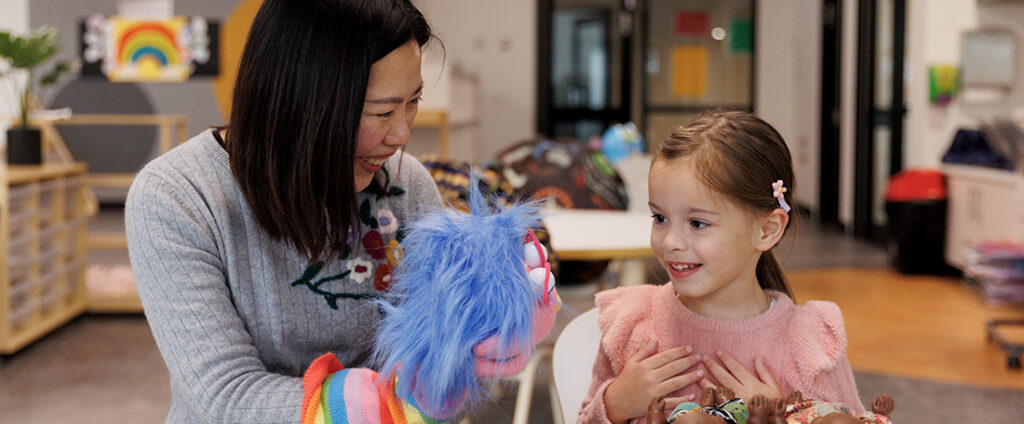
“Pretend you’re the teacher.” “What if you were the dragon?” Role-playing helps children explore different feelings and learn how to see things from someone else’s point of view. In kindergarten, we set up play spaces for children to create their own pretend play, such as home corners or mini classrooms.
Through this kind of play, little learners practice working through dilemmas like how to share, how to invite someone into a new game, or how to comfort a friend. Props and costumes add to the fun, while also sparking imagination and empathy. These playful moments lay the groundwork for problem-solving, kindness, and emotional awareness that carry well beyond kinder.
Circle time discussions and group sharing
Circle time isn’t just for morning greetings; it’s an opportunity for children to practise listening, speaking, and respecting each other’s voices. Some programs use a “talking object” (like a soft toy or special stone) to help children take turns and speak one at a time.
Themes might include “What made you happy this weekend?” or “Tell us about a time you helped someone.” This structure helps everyone feel safe to share while learning that their thoughts matter.
Games to enhance teamwork
Learning to work together in teams is an important skill built in kindergarten. Parachute games, building towers together, or follow the leader encourage children to notice their peers and work together in play.
Storytelling and social conversations
There’s nothing quite like a good story to teach a great lesson. Whether it’s a picture book about friendship or a made-up tale from a child’s imagination, stories help children connect to others and show different ways of being in the world.
After reading a story, our educators will extend the learning by asking children to share their thinking, e.g., “Why do you think the character felt sad?” or “What would you do in that situation?” We encourage children to share their own stories too, whether they’re real or delightfully imagined. Practising storytelling helps children express their thoughts clearly and understand the perspectives of others.
How to adapt activities for supporting every child
We know every child blooms in their own time. Some charge into group play like eager puppies. Others need a little more time to warm up. We’re experienced in adapting activities to meet children where they’re at. We do this by starting with small-group or one-on-one versions of social activities. This gives children the chance to build confidence in a safe setting before joining larger groups.
Key benefits of social skills activities for kindergarten children
Kindergarten social skills set children up for a lifetime of stronger relationships, better learning, and emotional well-being.
Building blocks for future learning
When children can work well with others, communicate clearly, and ask for help when needed, they’re better positioned for success at school. Group projects, class discussions, and problem-solving tasks become more effective when social skills are in place.
Boosted self-esteem and confidence
There’s something powerful about learning how to say, “Can I play too?” or “I feel sad.” When children realise they can connect with others and express their needs, their confidence blossoms. Mastering even small social moments—like introducing themselves or offering to help—gives them a sense of pride and belonging.
Stronger relationships with peers
Children with strong social skills make friends more easily and are more likely to engage in positive peer interactions. They’re also better at handling disagreements and bouncing back from social bumps. This contributes to an environment where everyone feels safe and included.
Increased emotional resilience
When children learn to name their emotions, ask for help, and regulate their responses, they build resilience. They’re better equipped to handle disappointment, wait their turn, or try again after making a mistake. These are skills they’ll use not just in school, but for life.
Ready to support your child’s social development?
Social development in kindergarten isn’t just learned; it’s lived. Every game, every giggle, every “I’m sorry” and “You go first” is a step forward. At Uniting, we understand the magic of these moments. Our kindergarten programs are designed to nurture not just curious minds, but kind hearts too.
If you’re ready to support your child’s social and emotional growth in a caring, playful, and enriching environment, take a look at our kindergarten services. Let’s build those big, little skills together.