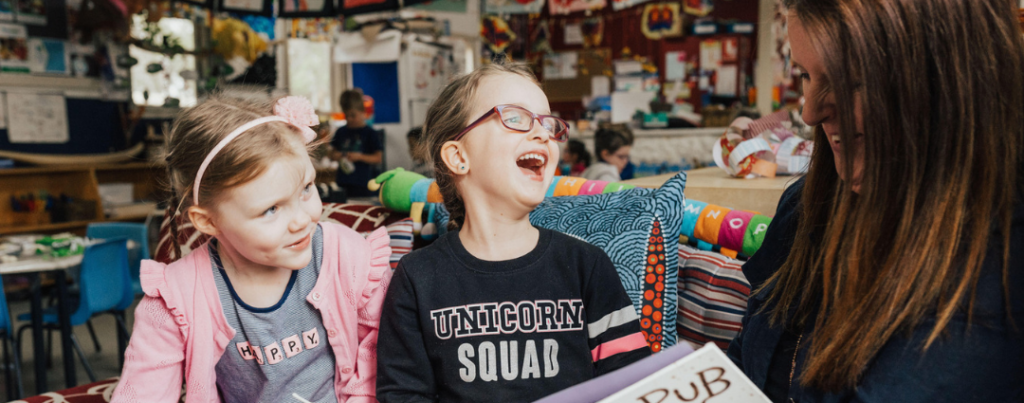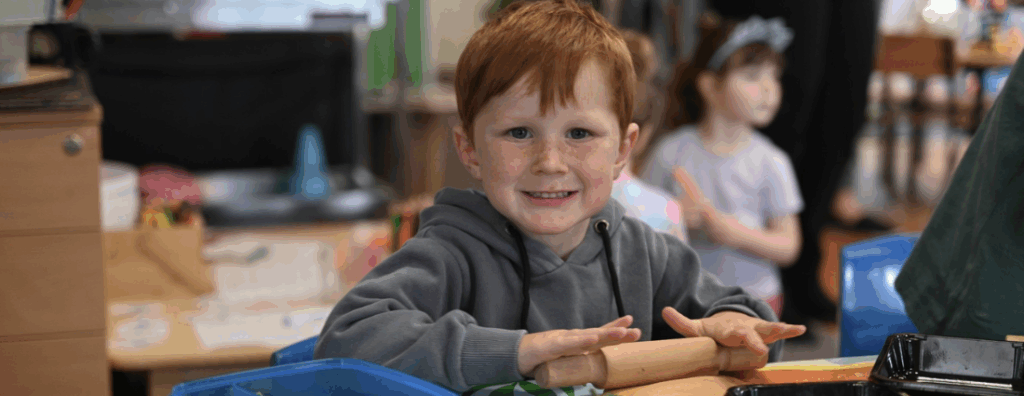
When you think of early learning, do you picture colourful blocks, a dress-up corner, and the sound of joyful giggles echoing through the room? This is play-based learning in action; learning in its most natural and powerful form.
It’s grounded in decades of educational theory and backed by science. Play–based learning is how little minds grow big ideas, one imaginative game at a time. In a world increasingly focused on academic milestones, play-based learning brings us back to an important foundation for learning: curiosity, creativity, and connection. So let’s explore what play-based learning truly means, why it matters, and how it benefits children.
What is play-based learning?
Play-based learning is an educational approach where play is the vehicle for learning. Rather than direct instruction, children learn through hands-on activities, role-playing, experimentation, and social interaction.
In a play-based learning environment, you’ll find children building with blocks to understand spatial awareness, pretending to be shopkeepers to explore early numeracy or creating stories with puppets to strengthen language skills. It’s child-led, supported by educators who extend learning through questions, suggestions, and resources
The origins of play-based learning
While it may feel like a modern, progressive idea, play-based learning in early childhood has deep historical roots. Think back to Friedrich Froebel, the 19th-century German educator who coined the term “kindergarten”—literally “children’s garden.” Froebel believed that structured play was vital for young minds to flourish, much like plants in a garden. His ideas inspired the first early childhood education programs across Europe.
Then came Maria Montessori, whose approach emphasised self-directed play with thoughtfully designed materials. Jean Piaget, a Swiss psychologist, further established that children learn best through active, hands-on experiences. Today, the Early Years Learning Framework (EYLF) in Australia builds on these foundations, recognising play as central to learning in the early years.
Key benefits of play-based learning
Enhancing cognitive development
Through games and play-based experiences, children flex their memory, practice problem-solving, and test out new ideas. Building a tower teaches cause and effect. Solving a puzzle sharpens spatial reasoning. Pretending to be a doctor requires recall, imagination, and logical sequencing.
Research shows that children engaged in play-based learning often perform better on cognitive flexibility and working memory tasks. Simply put: when children play, their brains build strong foundations for lifelong learning.
Promoting emotional intelligence
Feelings are big when you’re little. Play provides a safe space for children to explore emotions, practise empathy, and develop resilience. In a tea party game gone wrong, a child learns to resolve conflict. When playing “mums and dads,” they practise caregiving and compassion.
Through imaginative play, children develop a better understanding of themselves and others. This nurtures emotional regulation and social awareness: skills that set them up for healthy relationships later in life.
Fostering physical and motor skills
Hop, skip, climb, paint. Every action in play helps fine-tune a child’s motor skills. Whether it’s balancing on a beam or threading beads onto a string, physical play builds strength, coordination, and control. Gross motor skills—like running, jumping, and climbing—develop through outdoor play and movement games. Fine motor skills—used for writing, tying shoes, and using tools—are strengthened through activities like drawing, cutting, or building with blocks.
Why is play-based learning important in early childhood?
Play as a natural learning tool
Children are hardwired to learn through play. It’s their language, their lab, and their lens to view the world. Play-based learning aligns with how young minds naturally explore: through curiosity, imitation, and experimentation.
Think of a toddler investigating a bug on the footpath or a preschooler mixing mud with leaves. They’re not just playing; they’re hypothesising, testing, and discovering. Play invites children to engage with their environment in meaningful ways.
Play-based learning in the early years
The early years—from birth to age five—are critical for brain development. During this window, over one million new neural connections form every second. Play-based learning fuels this growth by stimulating multiple areas of development at once.
Children immersed in rich, play-based environments tend to transition more smoothly into formal schooling. They’re confident communicators, enthusiastic learners, and cooperative classmates—skills that matter just as much as knowing their ABCs
Play-based learning advantages for children and educators
Creating an engaging learning environment
At Uniting Vic.Tas Early Learning, our play-based classrooms are thoughtfully designed to inspire curiosity, creativity and confidence. We not only provide open-ended materials, but we also create environments that invite children to explore, problem-solve and connect with the world around them.
Here’s how we foster play-rich environments:
- We rotate materials regularly to spark new interests and extend their learning
- Our learning spaces feature dynamic, with themed areas (like kitchens, science labs and building zones)
- We bring the outdoors in (and the indoors out) by incorporating natural elements like water, sand, and wood
- Play is purposefully guided, with educators observing closely, setting up provocations and responding to each child’s unique learning journey
Collaborative play: the role of teachers
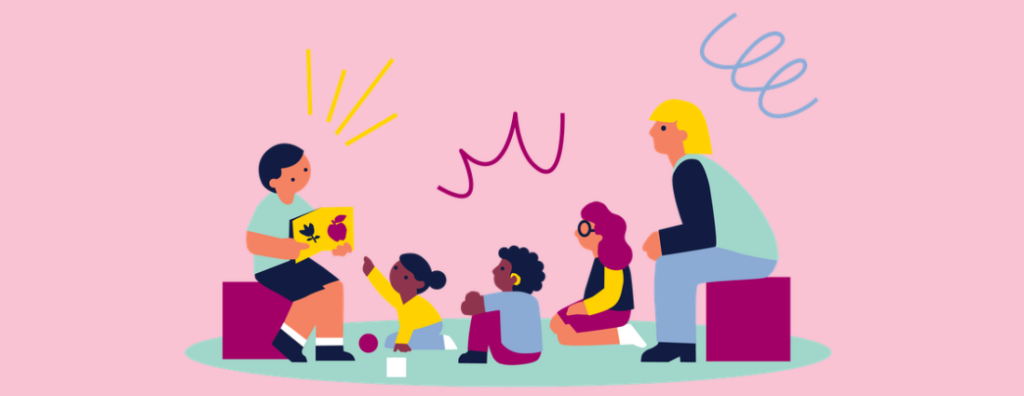
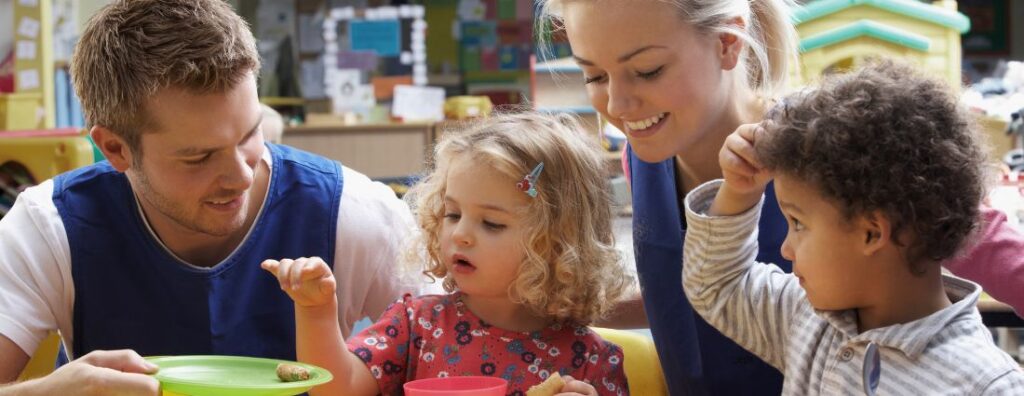
In play-based learning, educators are co-explorers, guides, and facilitators. Their role is to observe, listen, and respond with thoughtful questions or resources that deepen the learning.
For example, if children are pretending to build a zoo, a teacher might introduce animal books, maps, or measuring tools. They extend the play without taking it over, honouring the child’s ideas while connecting them to broader learning goals.
Ready to encourage outdoor play in your child’s routine?
Outdoor play is an essential extension of play-based learning. Nature provides endless opportunities for exploration, risk-taking, and discovery.
Whether it’s making mud pies, chasing bubbles, or building stick forts, outdoor play helps children engage their senses, strengthen muscles, and connect with the world around them.
At Uniting Vic.Tas Early Learning, outdoor play is woven into our kindergarten programs every day. Educators use natural settings to spark wonder, support physical development, and cultivate a love of learning.
Curious about play-based learning in early childhood education? Explore our Kindergarten programs in Victoria to learn more about how we support children through play—indoors and out.